Why Is Printer Ink So Expensive? Here’s the Real Answer
Printer ink is expensive because manufacturers make most of their profit from ink—not the printer itself. The ink is engineered for specific models, backed by billions in R&D, and manufactured using complex, proprietary tech. That means what you’re really paying for isn’t just ink—it’s the high-performance science behind every drop.
But here’s the kicker: most people are overpaying.
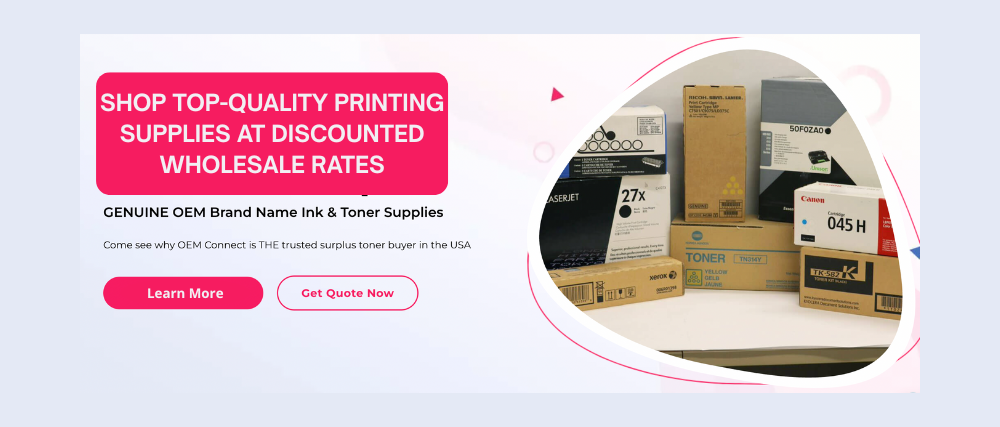
At OEM Connect, we source top-brand ink—HP, Epson, Sharp, and more—at below-market prices. That’s how we offer the same reliable, high-quality cartridges without the usual markup.
Shop Genuine Ink Cartridges at OEM Connect
For Profit
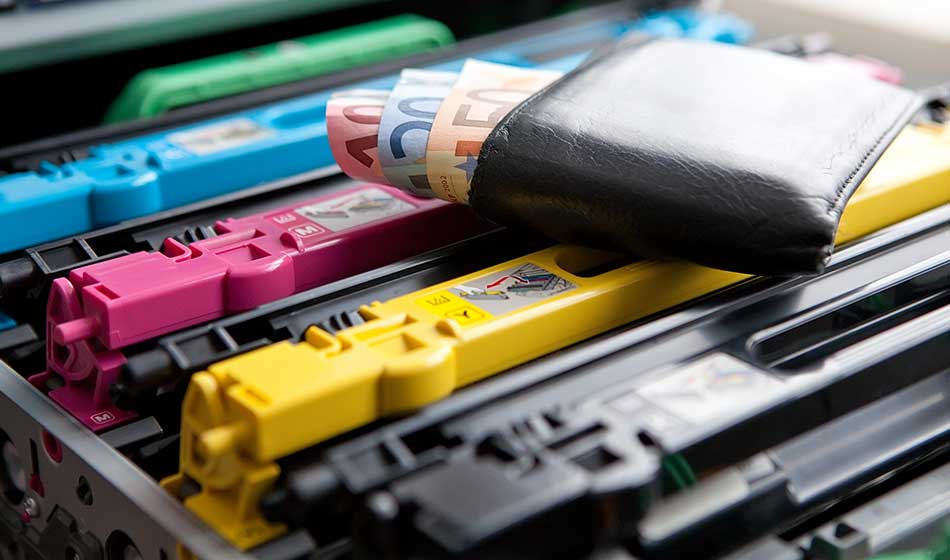
Many printers are sold at a cheap price. Printers are cheaper to attract more customers. Furthermore, with old printers being recycled and refurbished, printers are sold at a lower price. In order to break even, companies such as Epson and Canon have sold inks at a higher price. In fact, without ink, a printer is as good as useless. So, the demand for printer inks will always be high. This is how companies ensure that they earn profits from the printing supplies when the printers are cheap.
Research and Development
It is reported that companies spend at least one billion dollars a year on the research and development of inkjets and laser printers. A lot of technology is used to manufacture cartridges. And each company develops its own ink with unique formulations. The printers and copiers are also designed to suit how the cartridges work. This adds to the prices of inks.
Specialized Products
Many ink cartridges are designed specifically for certain printer designs. When you buy ink, remember to always check your printer model so that you are spending your money purposefully. Every cartridge comes with an XL version, which means high capacity. These high-capacity cartridges are great if you print a lot. You can save on the cost per page too.
Quality Product
While printer inks are expensive, they are very seldom problematic. In fact, they do not even cause problems. Inks are discharged properly from the cartridges, and the printing process is usually very smooth. Buying remanufactured cartridges at a lower price is not worth it. These will produce poor image quality. Hence, given the quality of newly and carefully designed ink cartridges, the high price is justified.
It’s Expensive from Complexity of Ink Manufacturing
The thinking behind the design process of the ink cartridges is ingenious and this translates to their prices as well. The chambers within printer cartridges contain a filament. When this filament heats up, the ink will bubble. The high pressure then channels a droplet of ink from the cartridge to the print head and onto the paper. Other companies such as Epson and Brother use electric charges to vary the structure of the piezoelectric material within the cartridge. The pressure causes the ink to discharge to the print head and onto the paper.
If you are thinking of getting printer inks, explore OEM Connect’s product page today. They sell a wide range of ink from diverse brands such as Epson, Sharp, and HP. We sell inks at a price below the market value because we are able to buy it at a better price. These products, although sold at a lower market price, are reliable and of excellent quality. On top of that, our company experts provide the best personalized customer service to help customers meet their needs. Contact OEM Connect today for more information on our products and services!
FAQ: Why Printer Ink Is So Expensive
Why is printer ink so expensive compared to the printer?
Most printer brands sell the printer close to cost (or at a loss) and make profit on supplies. Ink is where the margin is, and it’s also where the ongoing customer lock-in happens.
Is printer ink actually expensive to make?
The raw materials aren’t the main cost. The real cost is engineering: precise formulations, tight manufacturing tolerances, quality control, and compatibility testing across specific printer models.
Why do different printers require different ink cartridges?
Cartridges are designed to match specific printhead systems, firmware, and performance specs. Brands use unique chip designs and cartridge shapes so you can’t easily swap between models.
Do XL cartridges save money?
Usually, yes. XL/high-yield cartridges cost more upfront but often reduce cost per page, especially for offices or anyone printing regularly.
Is it safe to buy discounted genuine ink cartridges?
If they’re truly genuine and sourced properly, yes. The key is buying from a reputable supplier who can verify authenticity and match the cartridge to your exact printer model.
Are remanufactured or “compatible” ink cartridges worth it?
Sometimes, but it’s a risk tradeoff. You may save money, but you can also see issues like inconsistent color, leaking, firmware incompatibility, or printer error messages depending on the brand/model.
Why do some printers reject third-party cartridges?
Many printers use cartridge chips and firmware updates to authenticate supplies. Updates can change compatibility and trigger “non-genuine” warnings or block printing entirely.
Is laser toner cheaper than ink?
It depends on volume. Toner often wins on cost per page for high-volume printing, but the upfront cost of cartridges and the printer itself can be higher.
How can I lower my ink costs without sacrificing print quality?
- Use XL/high-yield cartridges when available
- Print in draft mode for internal documents
- Avoid unnecessary color printing
- Match the right cartridge to your exact printer model
- Buy genuine cartridges from a reputable distributor (often cheaper than big-box retail)
Why does ink dry out even if I don’t print often?
Some ink systems can dry or clog if unused for long periods, especially certain inkjet models. Occasional test prints and proper storage help reduce waste.